
CERN PGDay 2026 – an Extraordinary PostgreSQL Event
| Categories: | credativ® Inside Events PostgreSQL® |
|---|---|
| Tags: | CERN PGDay PostgreSQL® |
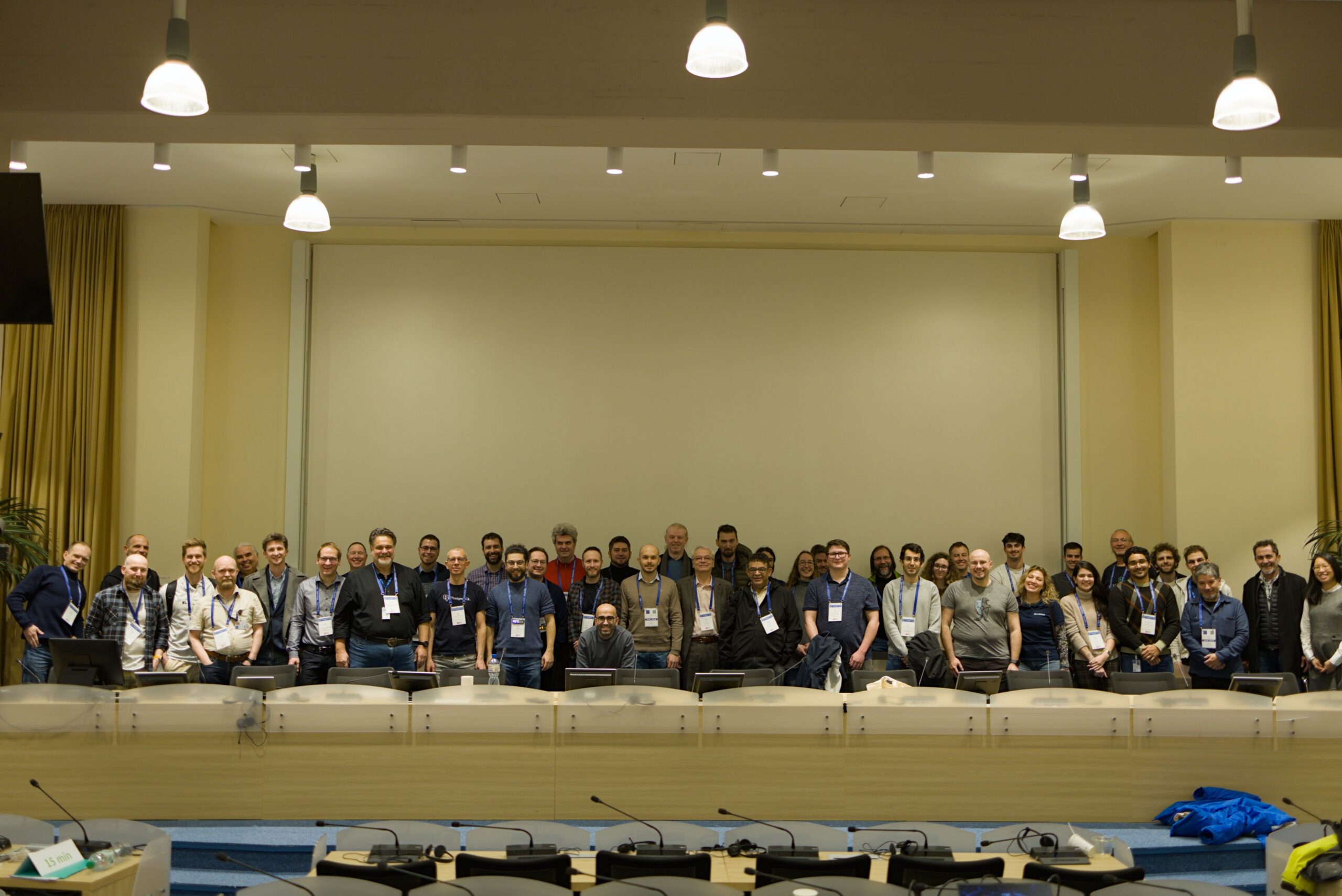
CERN PGDay 2026 took place on Friday, February 6, 2026, at CERN campus in Geneva, Switzerland. This was the second annual PostgreSQL Day at CERN, co-organized by CERN and the Swiss PostgreSQL Users Group. The conference offered a single-track schedule of seven sessions (all in English), followed by an on-site social event for further networking in the inspiring environment of CERN. With around 100 participants, this is already a very large PostgreSQL event for Switzerland. But what made this event absolutely special was its location. Hosting a database conference at CERN – one of the world’s leading science laboratories – provided a unique experience for everyone.
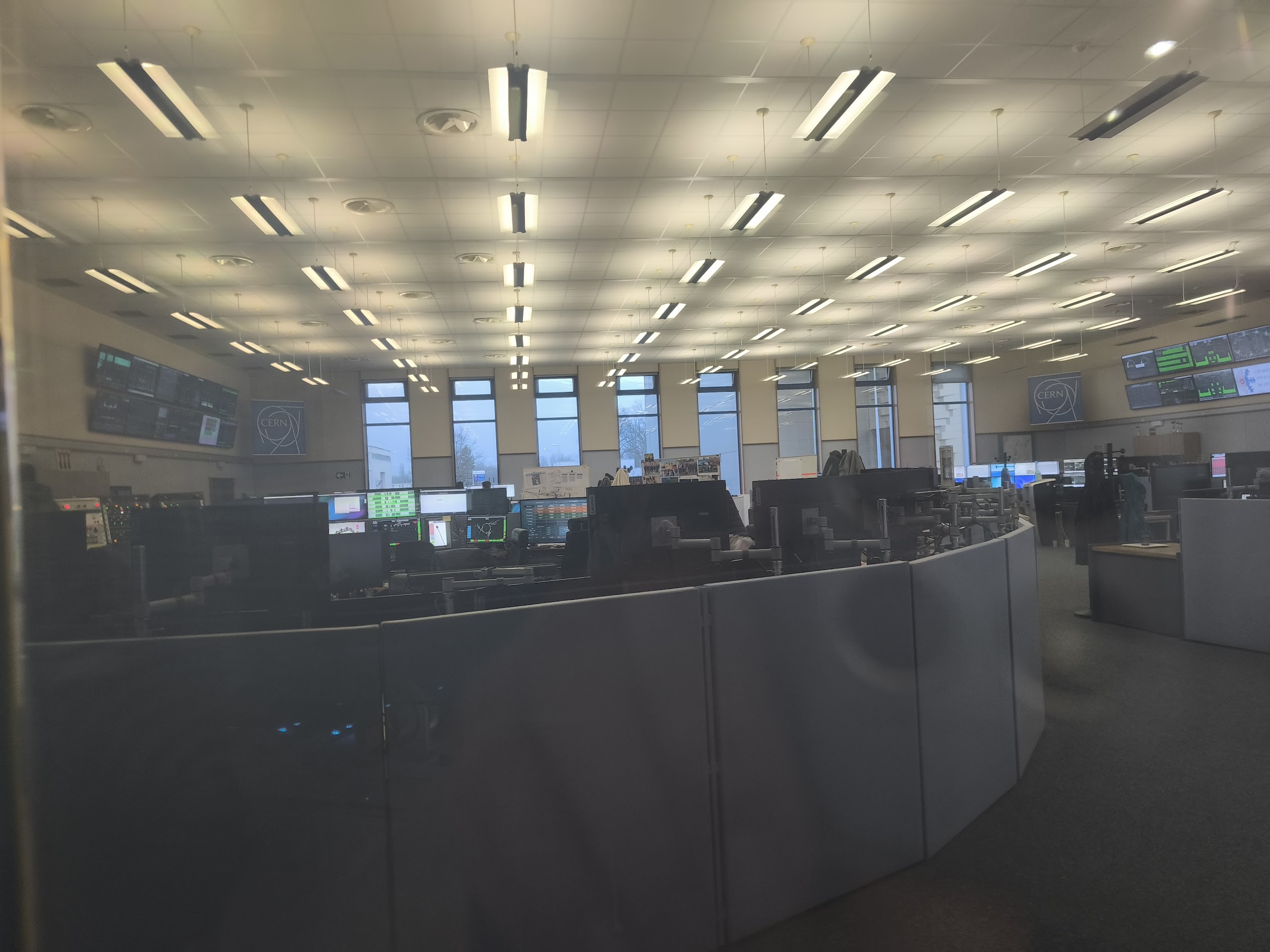
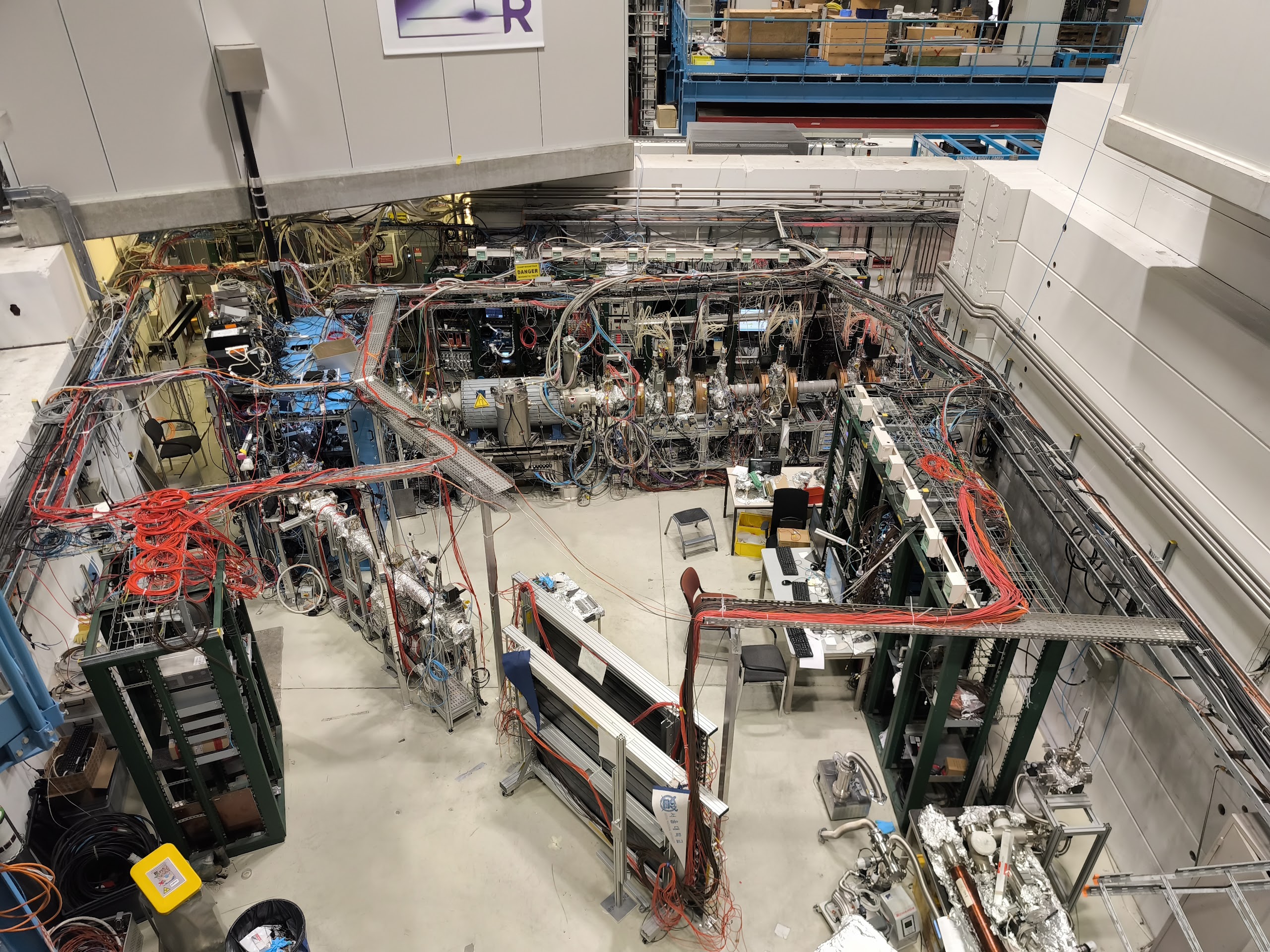
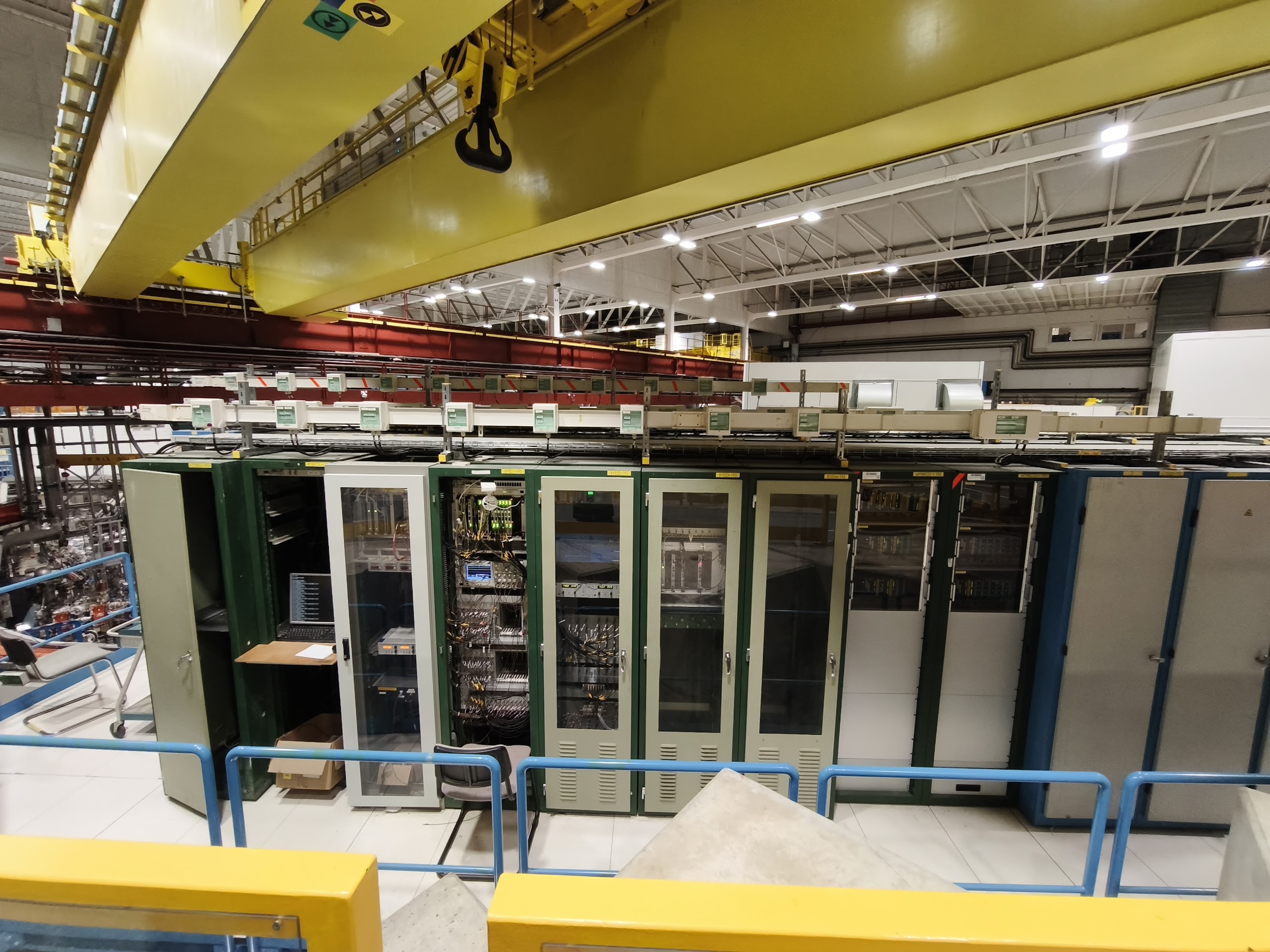
On the day before the conference, Thursday, February 5, CERN invited the speakers and sponsors to an exclusive tour of several facilities that showcased its extraordinary technology and research. We visited the CERN Control Centre (the operational hub for CERN’s accelerator complex), saw the facility where CERN tests superconducting magnets, and explored CERN’s “Antimatter Factory.” In the Antimatter Factory (the Antiproton Decelerator), we learned how CERN produces low-energy antiprotons and binds them with positrons to create antihydrogen atoms for antimatter experiments. This behind-the-scenes visit reminded everyone that we were gathering in a place of cutting-edge science and engineering.
Diving into Shared Buffers – My Talk
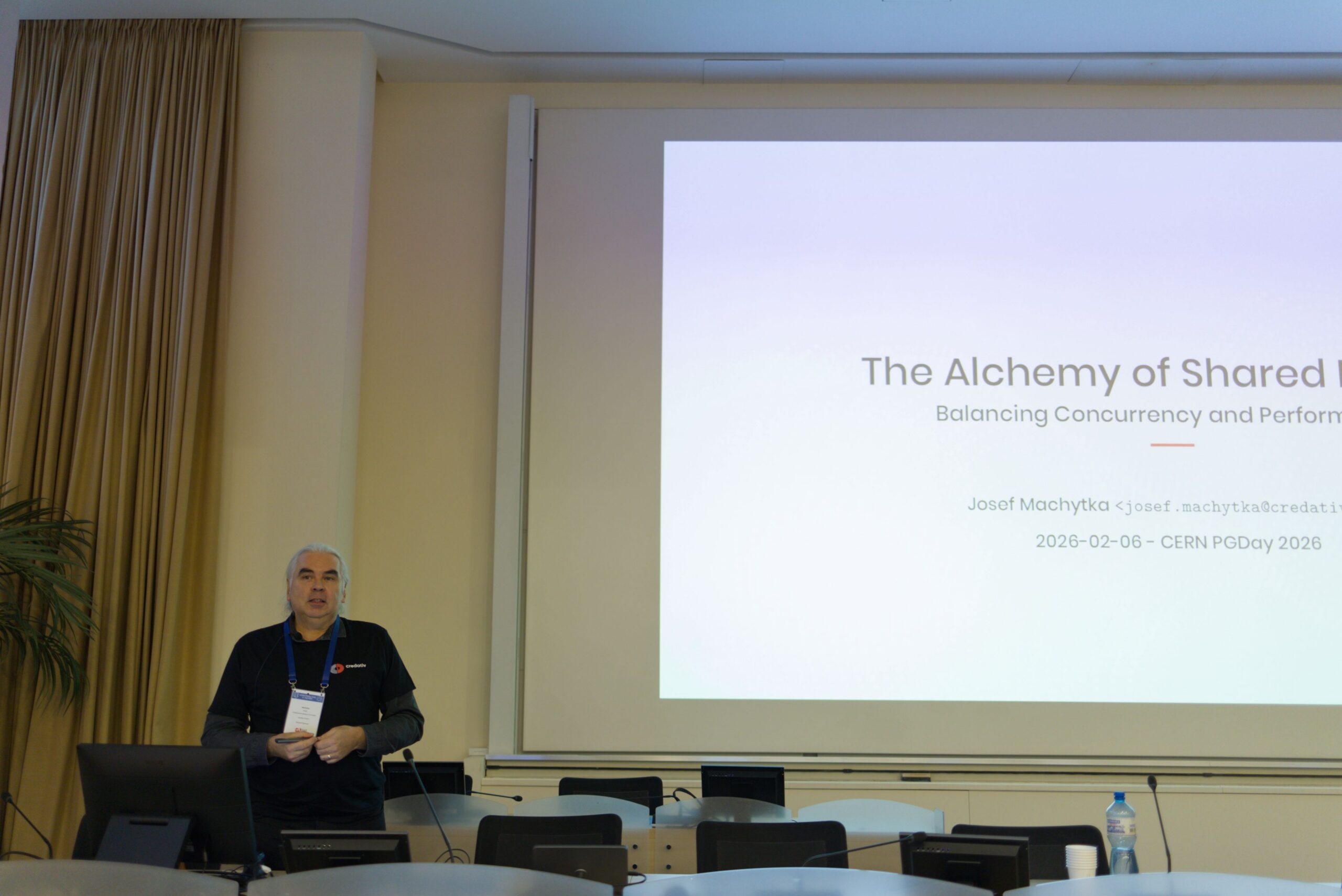
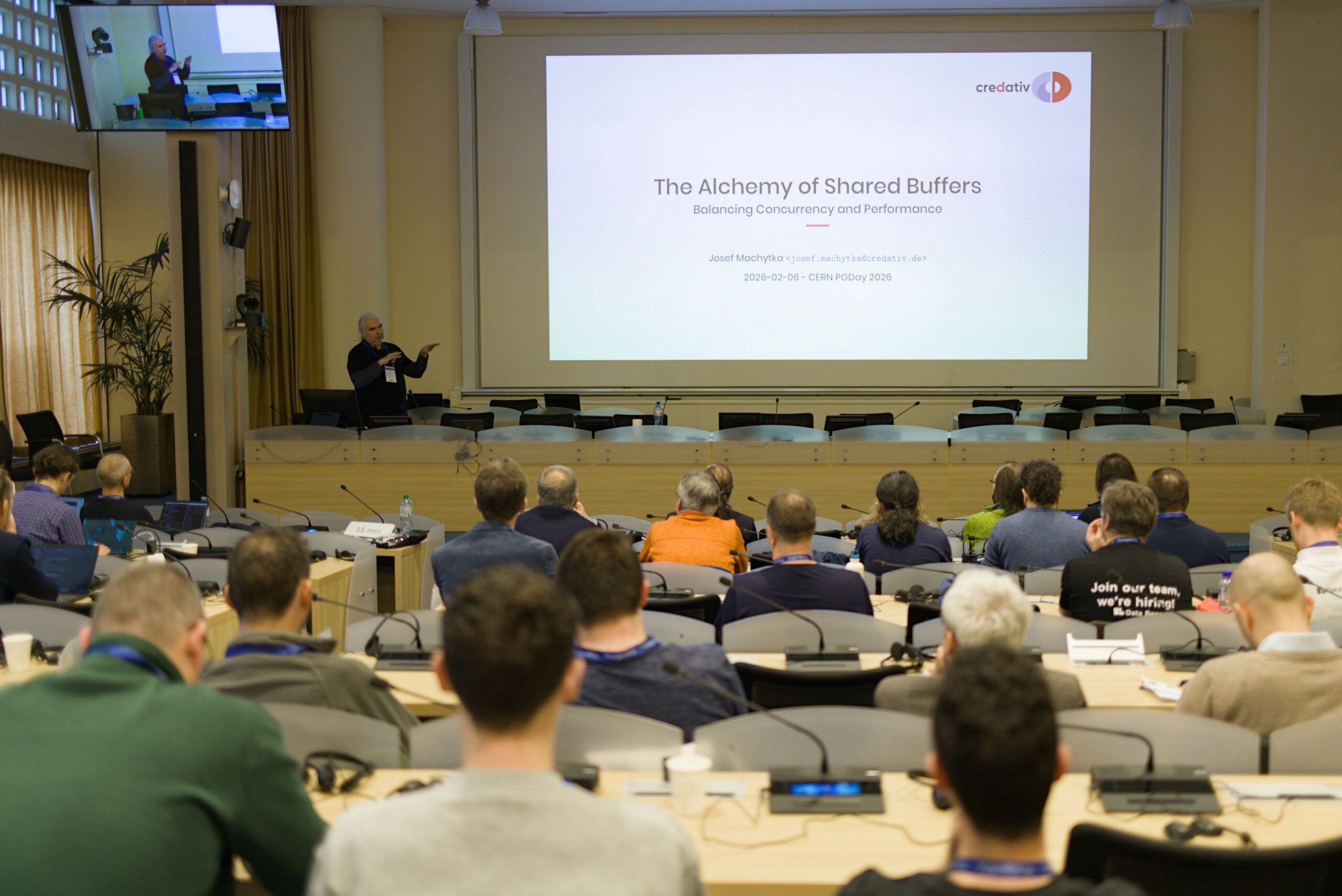
As one of the speakers, I presented a deep technical dive into how PostgreSQL’s shared buffer – titled “The Alchemy of Shared Buffers: Balancing Concurrency and Performance.” In this talk I explained how Linux implements operations with shared memory via tmpfs file system as operations with files and how PostgreSQL uses it to implement its shared memory objects. I dissected the three-layer architecture of shared buffers, the life cycle of a page in shared buffers, what happens during cache hit and cache miss, and buffer rings, that isolate bulk scans or vacuum operations so they do not wipe out the working set in the cache. Despite the deep dive nature of this topic, I received very positive feedback from attendees, which confirmed my previous experience that PostgreSQL conference audiences are hungry for more than just introductory talks.
Conference Program Highlights
- In “A new PostgreSQL backend for CERN Tape Archive scheduling for LHC Run 4,” Jaroslav Guenther and Konstantina Skovola presented work on the CERN Tape Archive (CTA), which stores over one exabyte of scientific data, and showed how a PostgreSQL-backed scheduler database can simplify the existing objectstore-based transactional system and support expected throughput growth during LHC Run 4.
- In “DCS Data Tools – PostgreSQL/TimescaleDB Implementation for ATLAS DCS Time-Series Data,” Dimitrios Matakias discussed modernizing access to over 68 TB of ATLAS Detector Control System time-series data (accumulated since 2007) using PostgreSQL and TimescaleDB, including an 11× storage reduction through compression (68 TB to 6.6 TB).
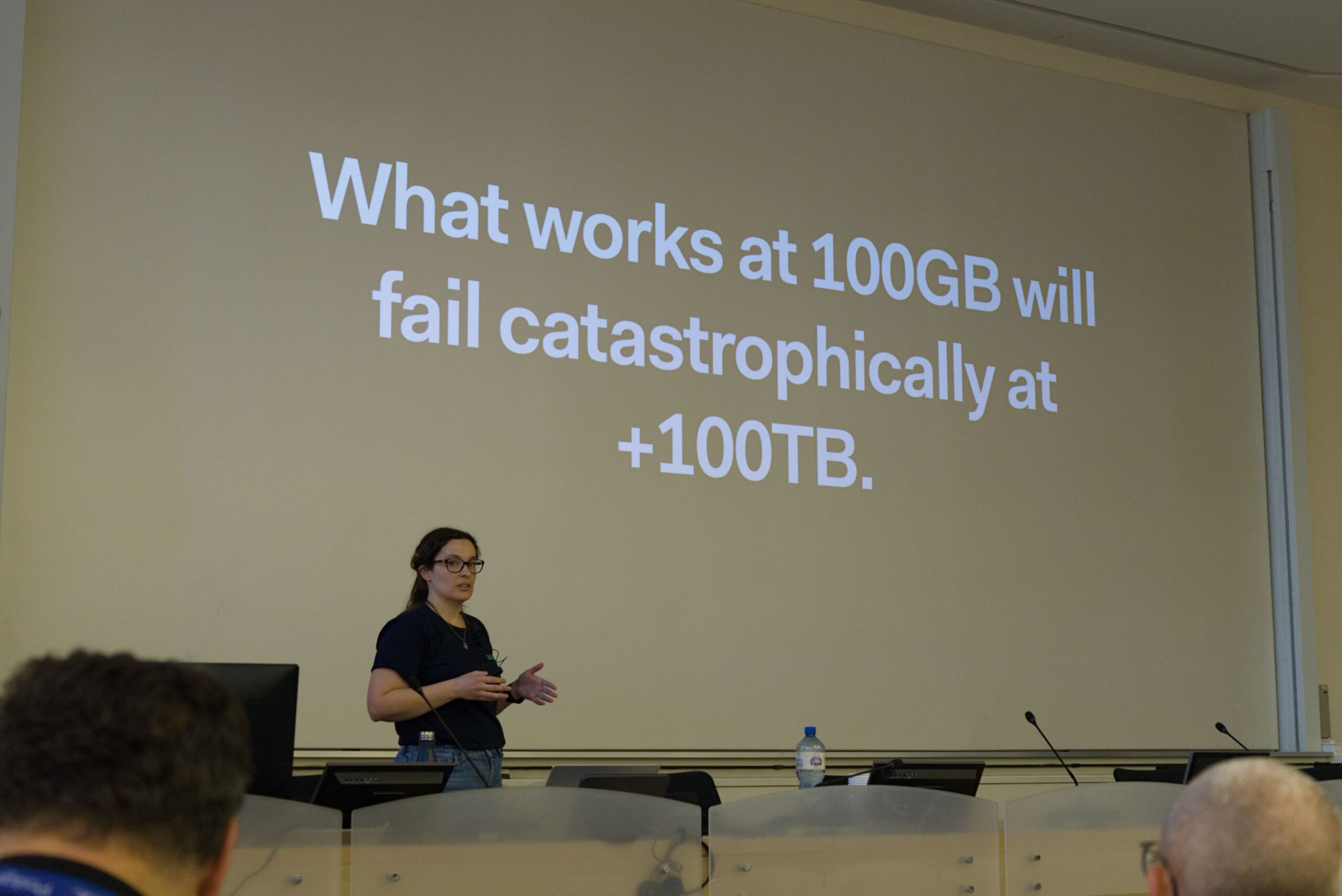
- Teresa Lopes shared an industry perspective in “Operational hazards of managing PostgreSQL DBs over 100TB,” covering what changes (and what breaks) when PostgreSQL database sizes reach 100 TB, 200 TB, or 300 TB—especially around backups/restores, high availability, vacuuming, and performance assumptions.
- Álvaro Hernández’s “The (very practical) Postgres Sharding Landscape” provided a pragmatic overview of today’s sharding options, including extension-based approaches and “native” techniques, and offered working examples and practical advice on selecting a strategy based on real constraints.
Closing Thoughts
Photos (c) Josef Machytka and CERN PGDay organizers
| Categories: | credativ® Inside Events PostgreSQL® |
|---|---|
| Tags: | CERN PGDay PostgreSQL® |
