
The PostgreSQL Conference HOW2026 in Jinan, China
| Categories: | Events PostgreSQL® |
|---|---|
| Tags: | planetpostgres planetpostgresql PostgreSQL® |
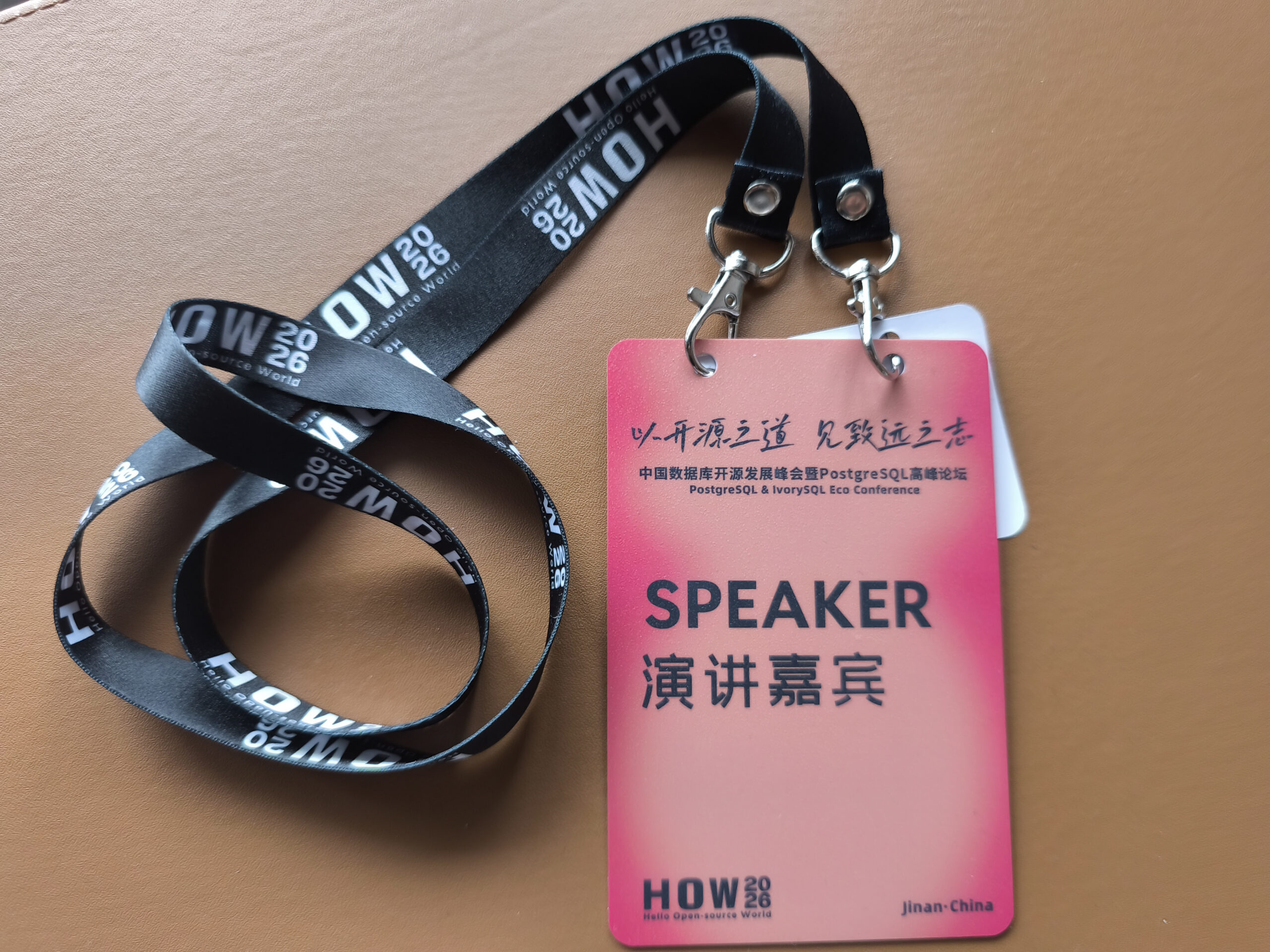
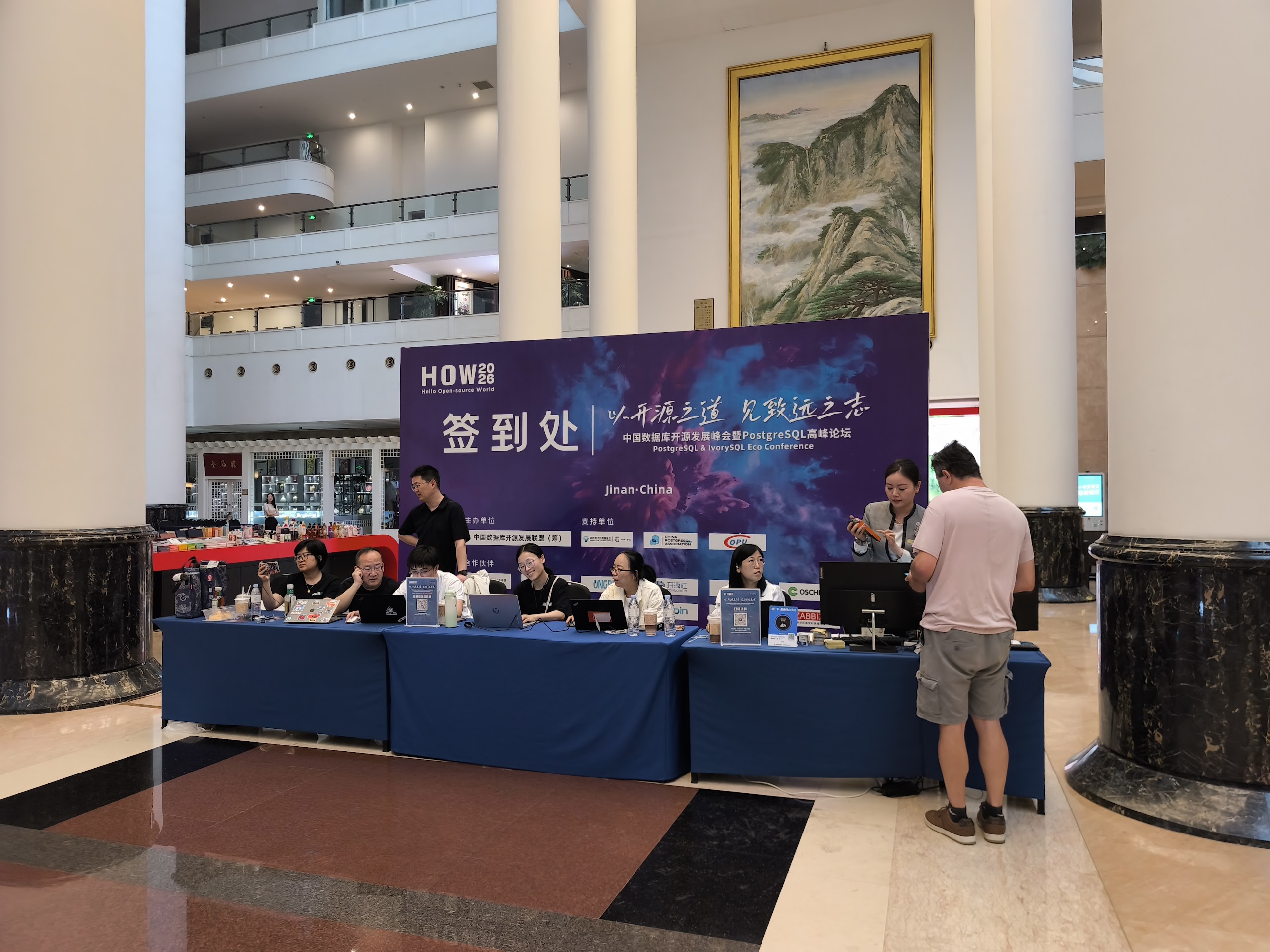
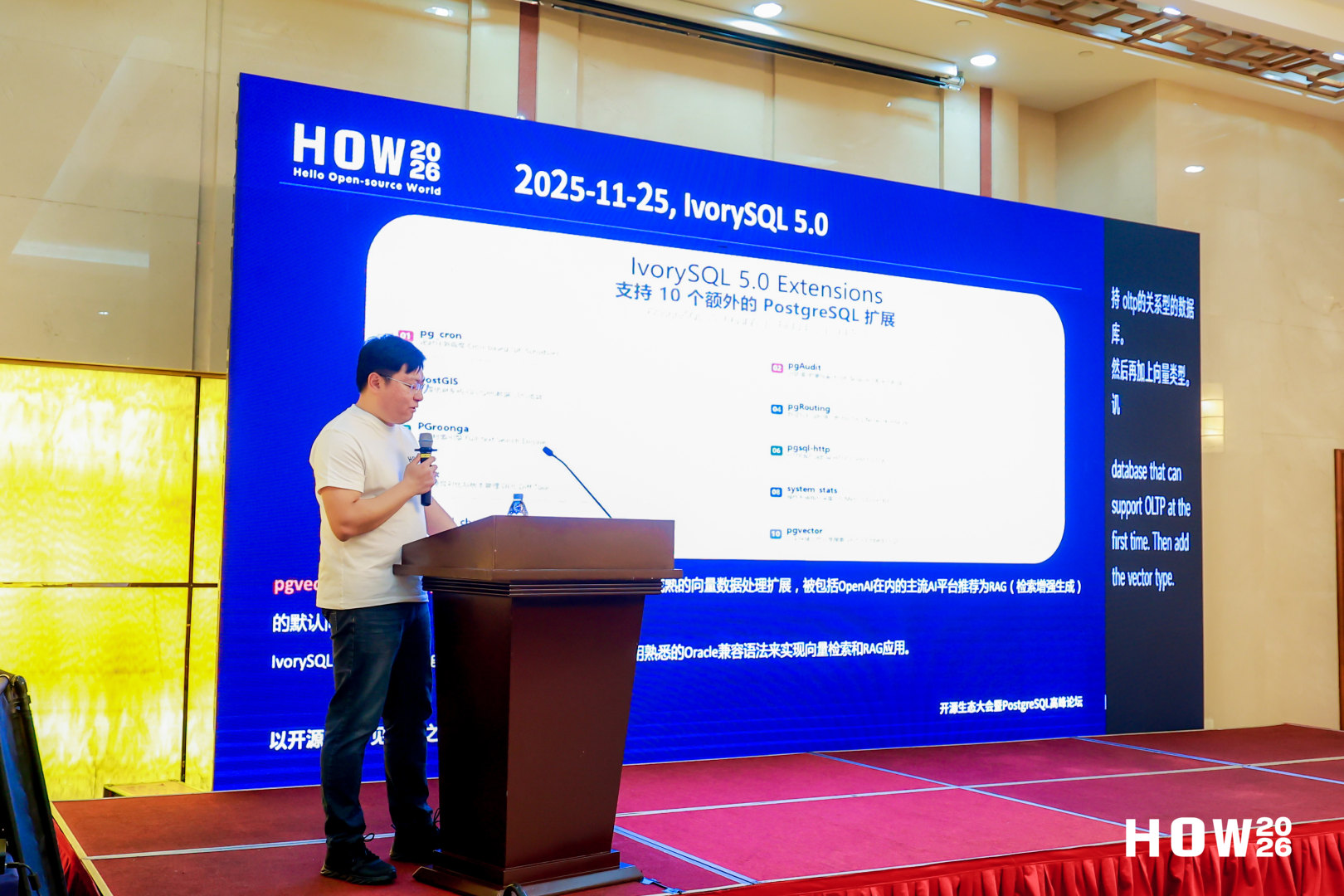
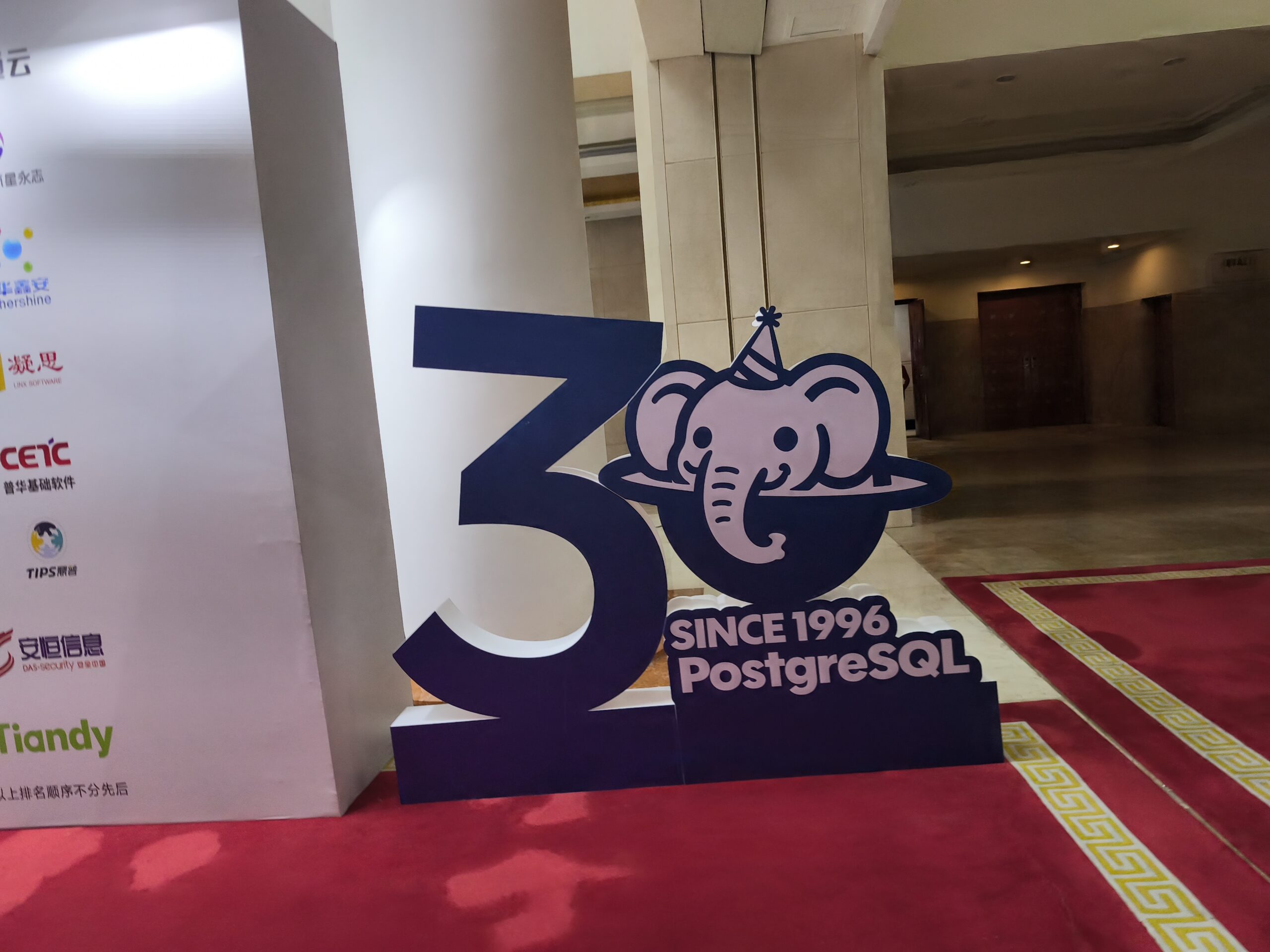
At the end of April, I had the incredible opportunity to represent credativ on the HOW2026 (Hello Open-source World), the PostgreSQL & IvorySQL Eco Conference in Jinan, China. IvorySQL is a Chinese fork of PostgreSQL with extended Oracle compatibility. In recent years, it has been gaining popularity not only in China. The conference brought together PostgreSQL and IvorySQL experts, contributors, and open-source database enthusiasts from around the world. The atmosphere was excellent, and I would like to share several highlights together with a recap of my contributions.
My Contributions
I was honored to contribute to the HOW2026 program with two sessions.
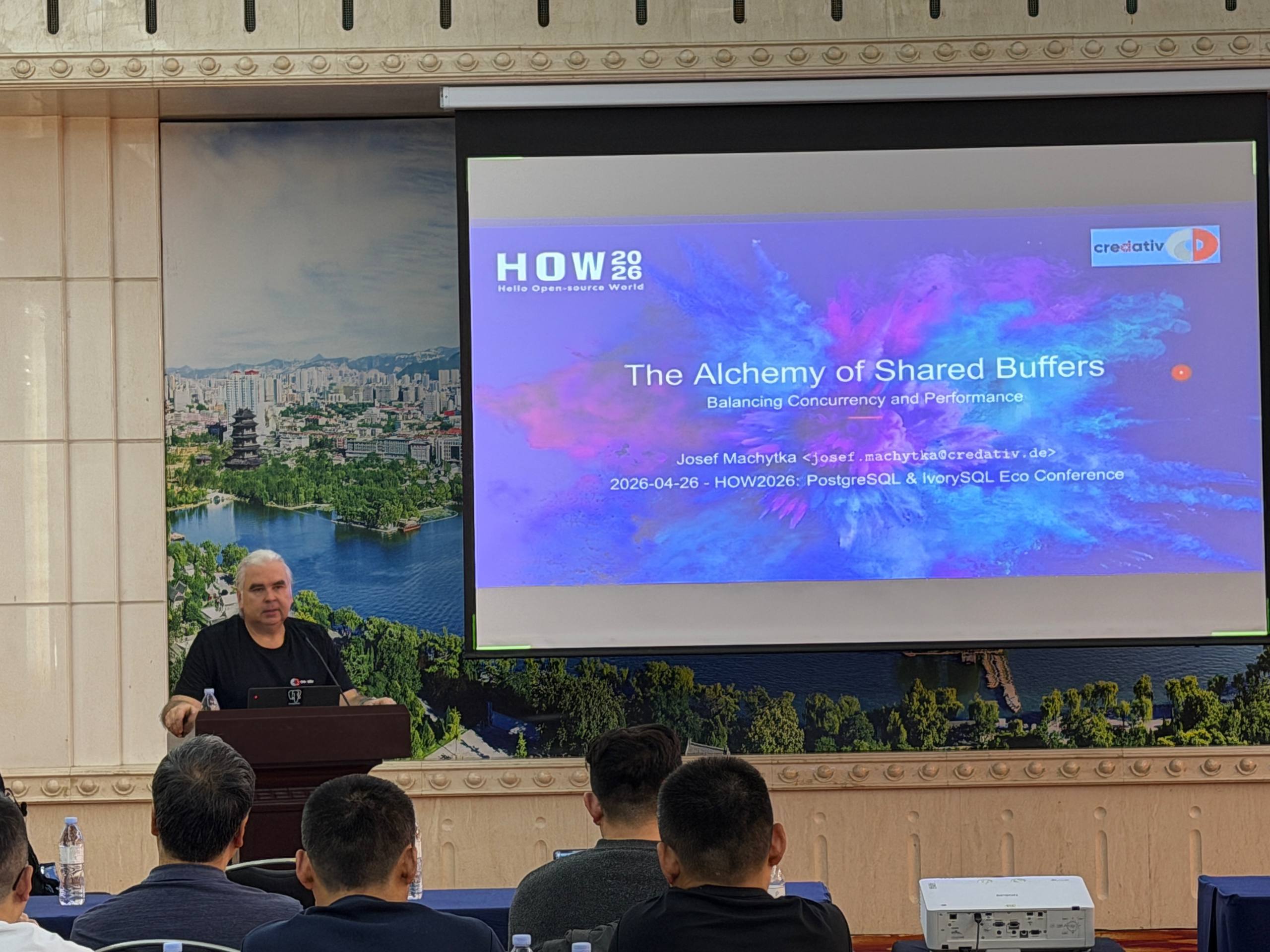
Workshop: The Alchemy of Shared Buffers
On Sunday afternoon, I led a three-hour deep-dive workshop exploring the intricate mechanics of PostgreSQL shared buffers. I discussed how Linux implements shared memory operations through the tmpfs file system, how shared buffers work internally, their practical limitations and usage patterns, why and how huge pages should be used for their allocation, why transparent huge pages negatively affect performance, and practical strategies for balancing high concurrency with optimal system performance.
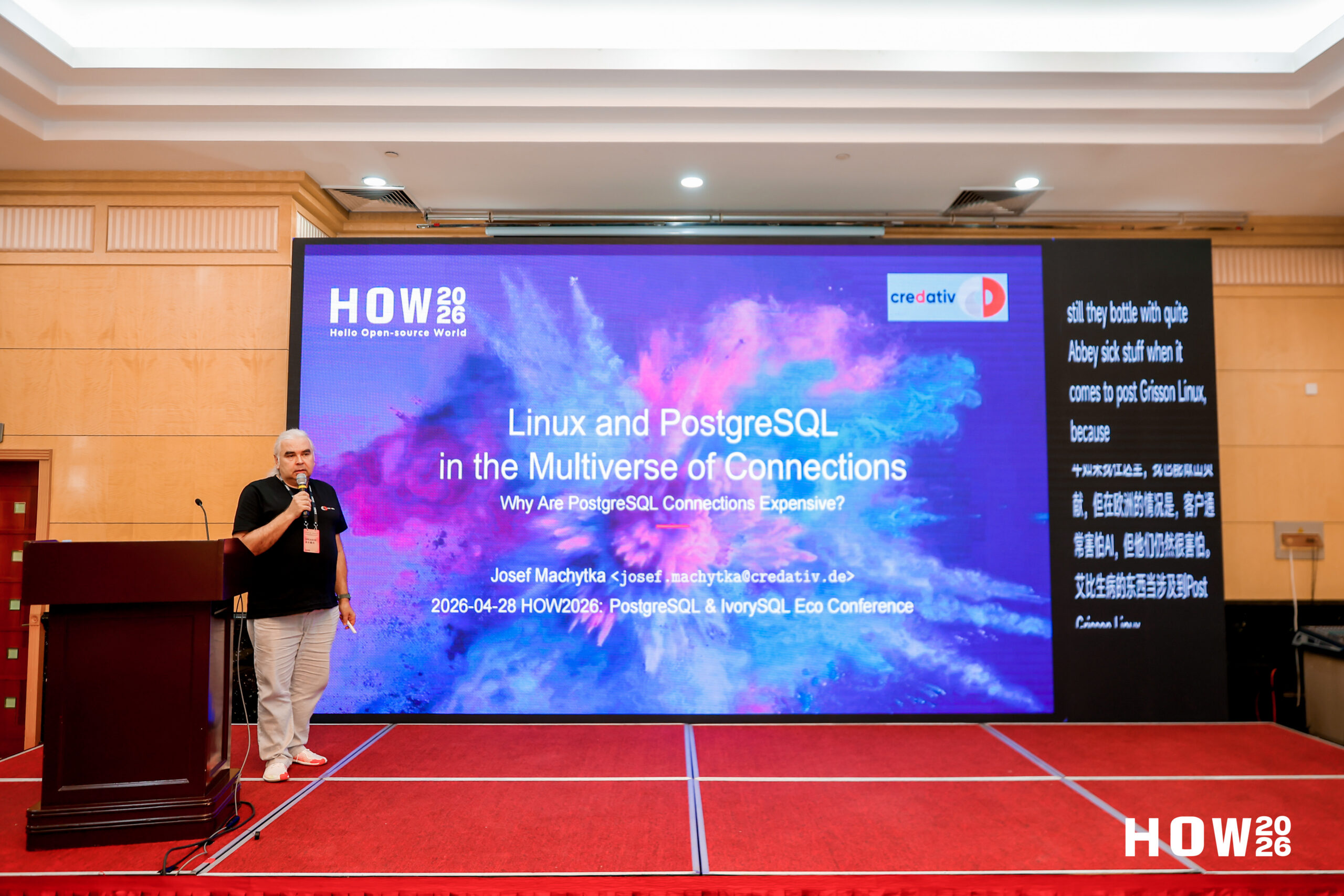
Talk: Linux and PostgreSQL in the Multiverse of Connections
On Tuesday afternoon, I gave a talk focused on PostgreSQL connection overhead. I discussed how PostgreSQL connections interact with the Linux kernel, covering memory usage, physical memory allocation mapping, context-switching overhead, and PostgreSQL internals to explain why large numbers of connections can significantly degrade performance.
Selected Highlights from the Conference
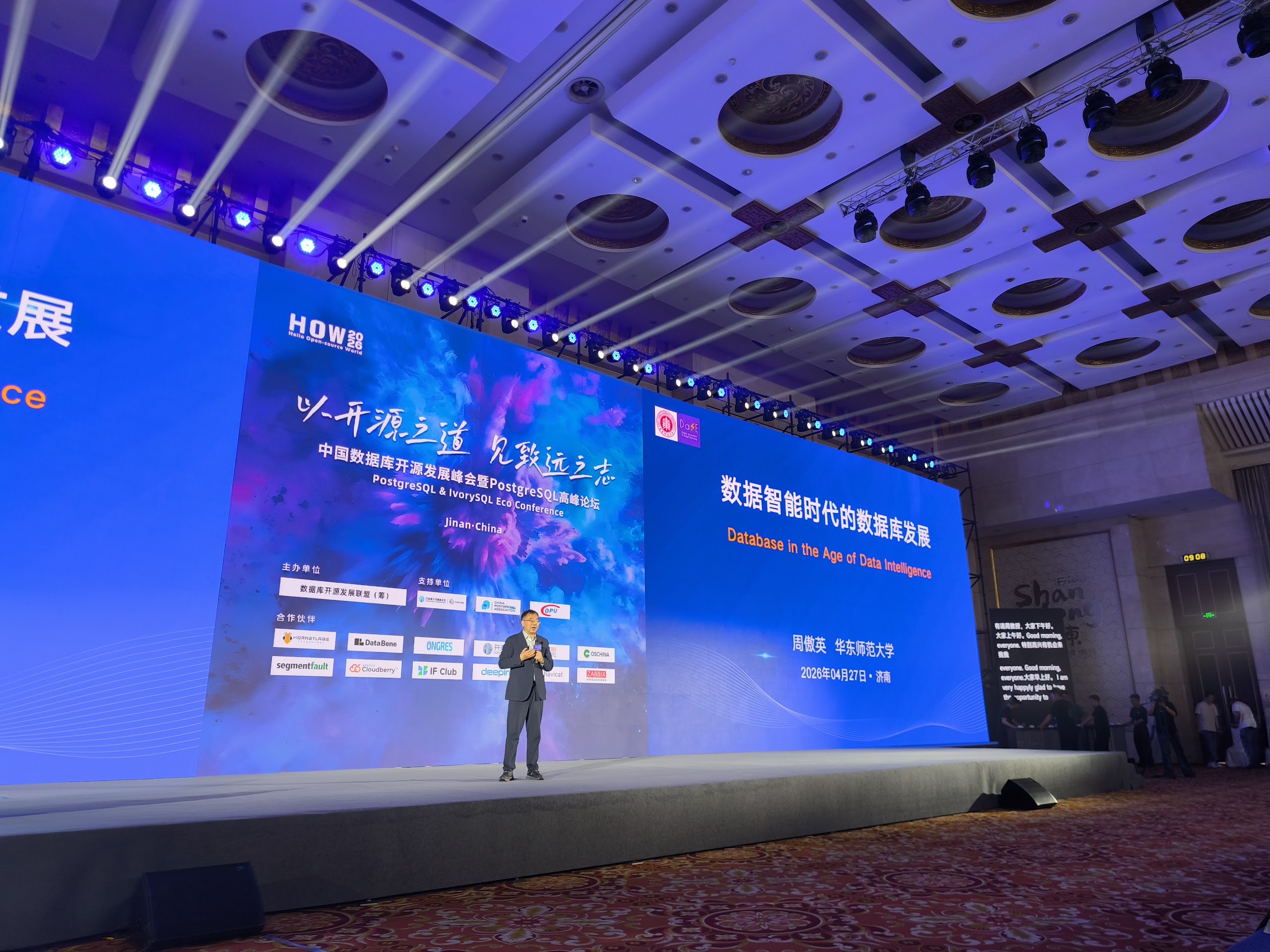
- The Development Trends of Databases in the Era of Data Intelligence — Aoying Zhou opened the event with his perspective on the future direction of database architectures in a data-driven era shaped by Artificial Intelligence. He discussed how tighter integration between databases and AI technologies will be one of the major drivers of future technological advancement.
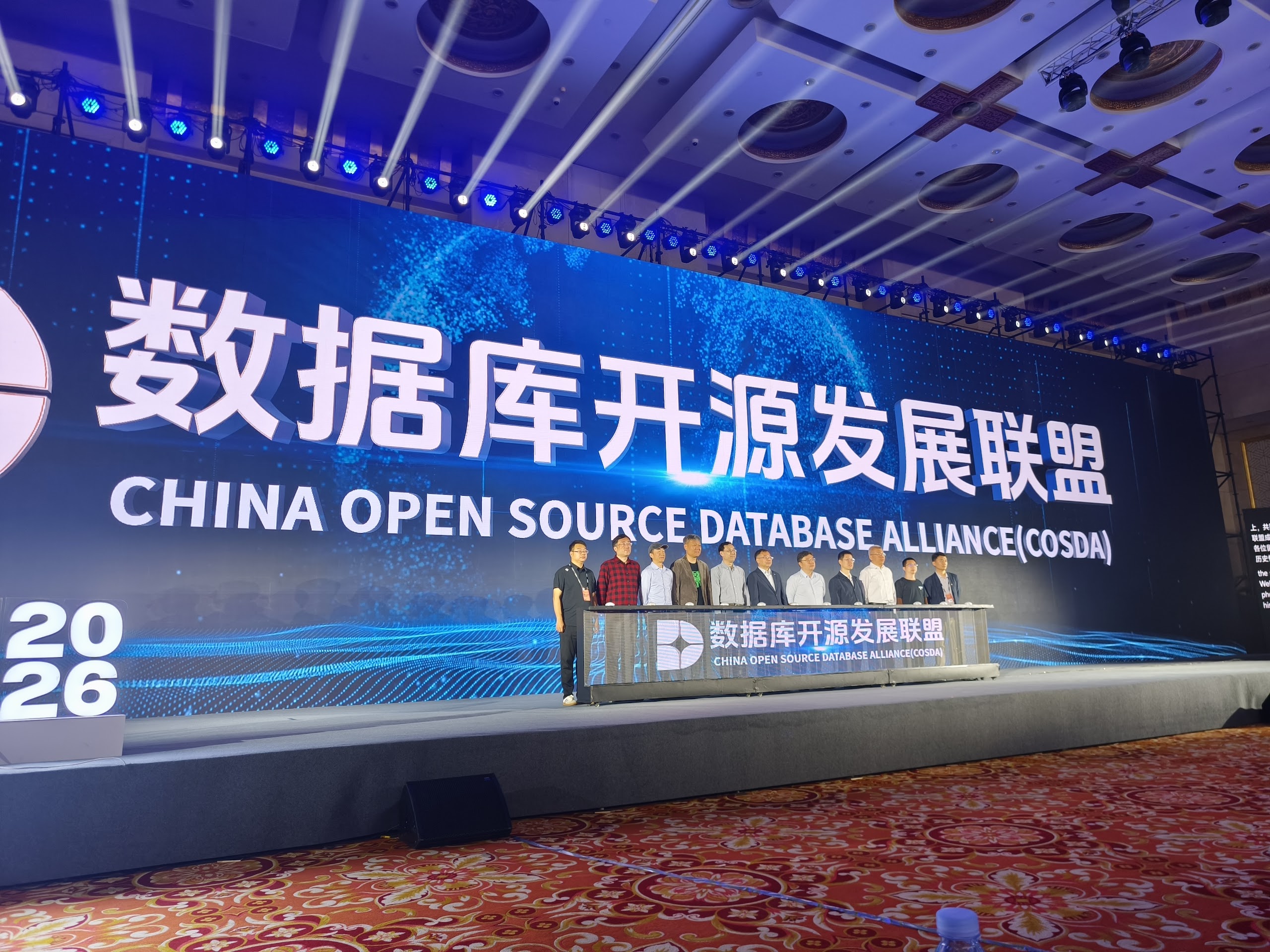
- Inauguration Ceremony of COSDA & China’s PostgreSQL Industry — We witnessed the official inauguration of the China Open Source Database Alliance (COSDA), followed by a strategic overview from Zhongyi Tan covering opportunities and the future roadmap for PostgreSQL in China. Chinese companies see significant potential in PostgreSQL and IvorySQL as widely deployable open-source database solutions that can also be offered internationally.
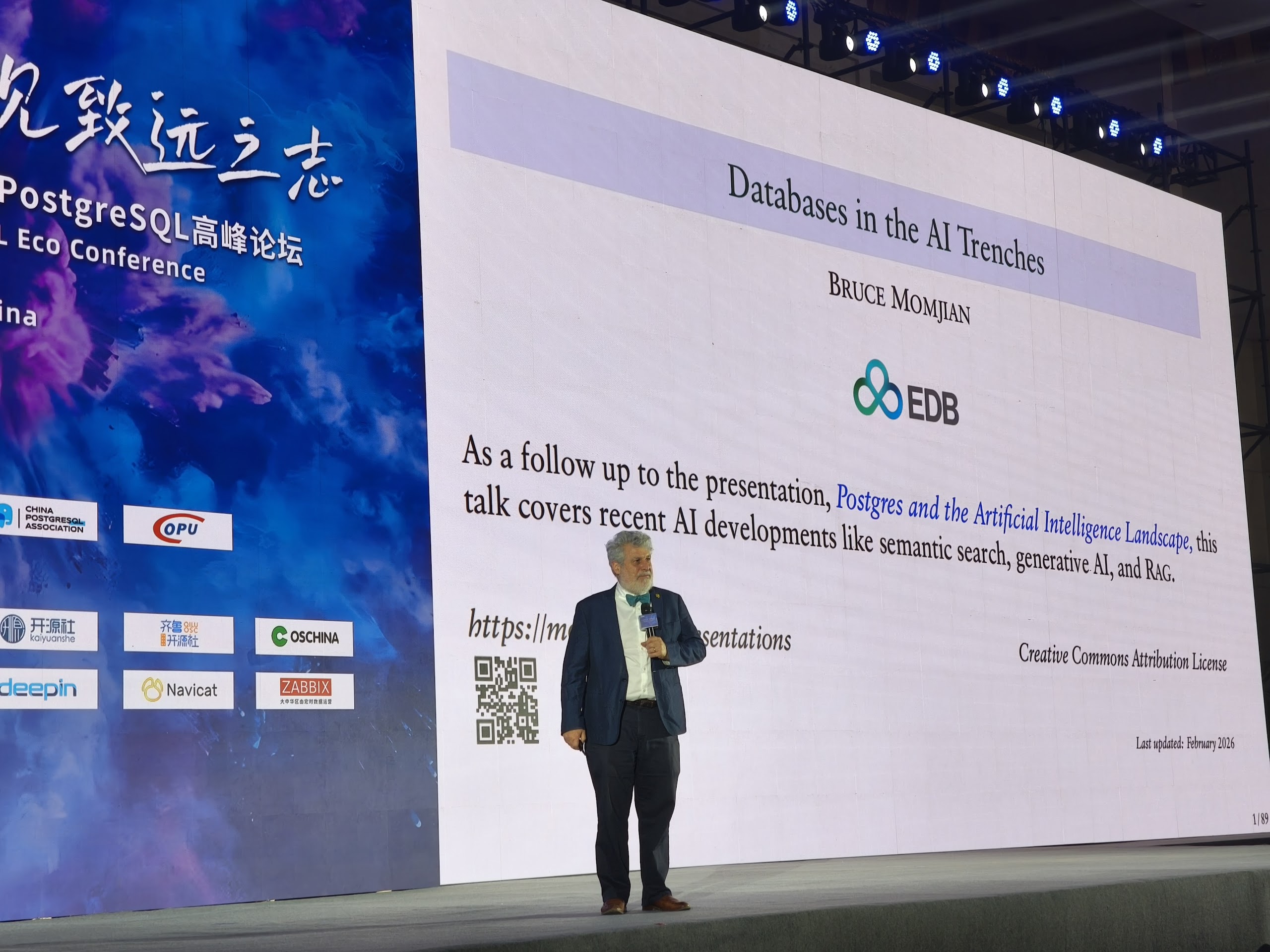
- Databases in the AI Trenches — Bruce Momjian delivered an insightful keynote on how PostgreSQL is adapting to the rapidly evolving demands of AI workloads.
- Open-Source Foundation, Boundless Intelligence Connection — Xinjie Lv highlighted the critical role that open-source communities play as the foundation for modern intelligent applications and platforms.
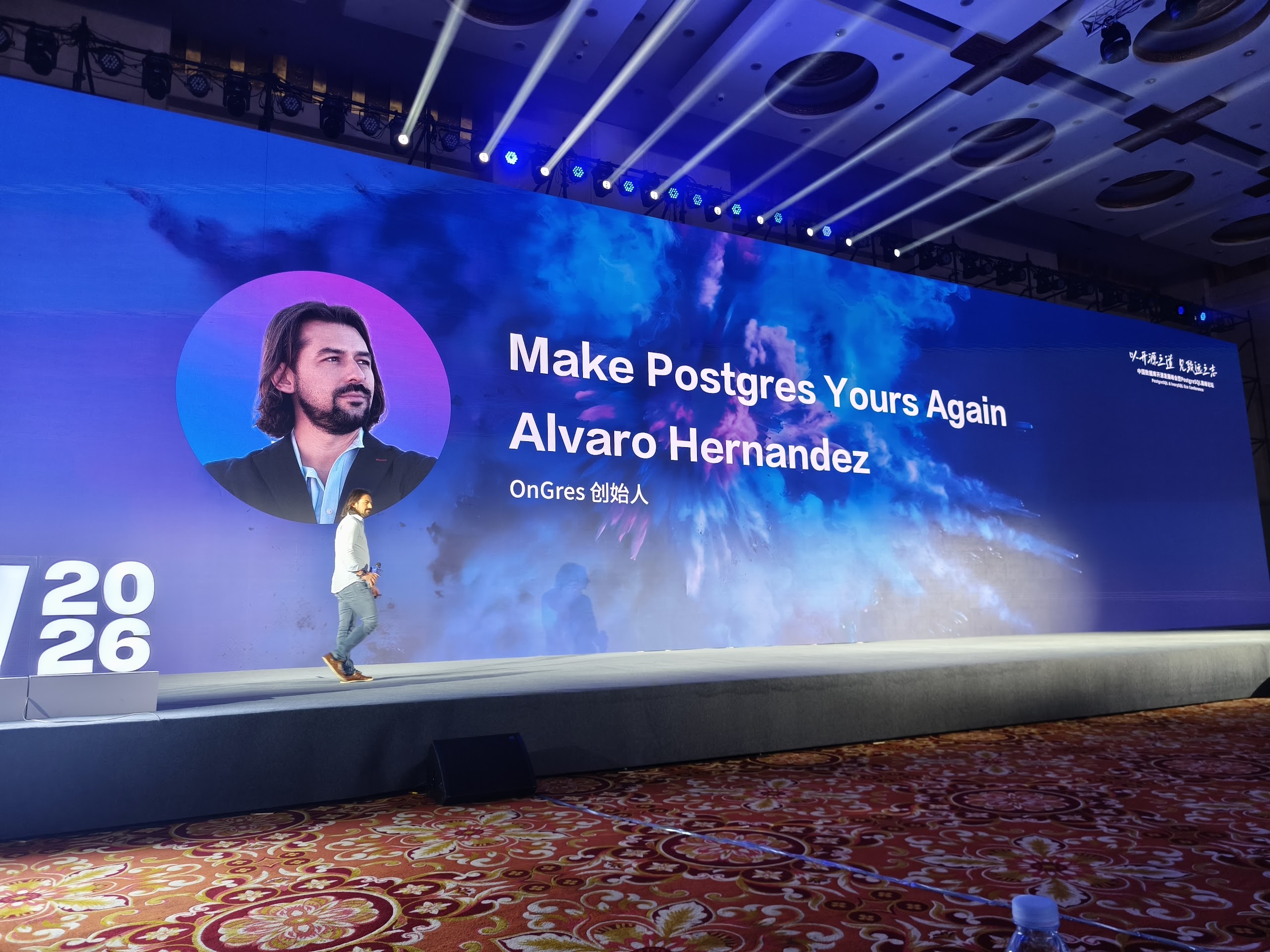
- Make Postgres Yours Again — Alvaro Hernandez presented an inspiring talk on PostgreSQL extensibility and on regaining operational control of database deployments through a new open-source deployment environment developed by his company.
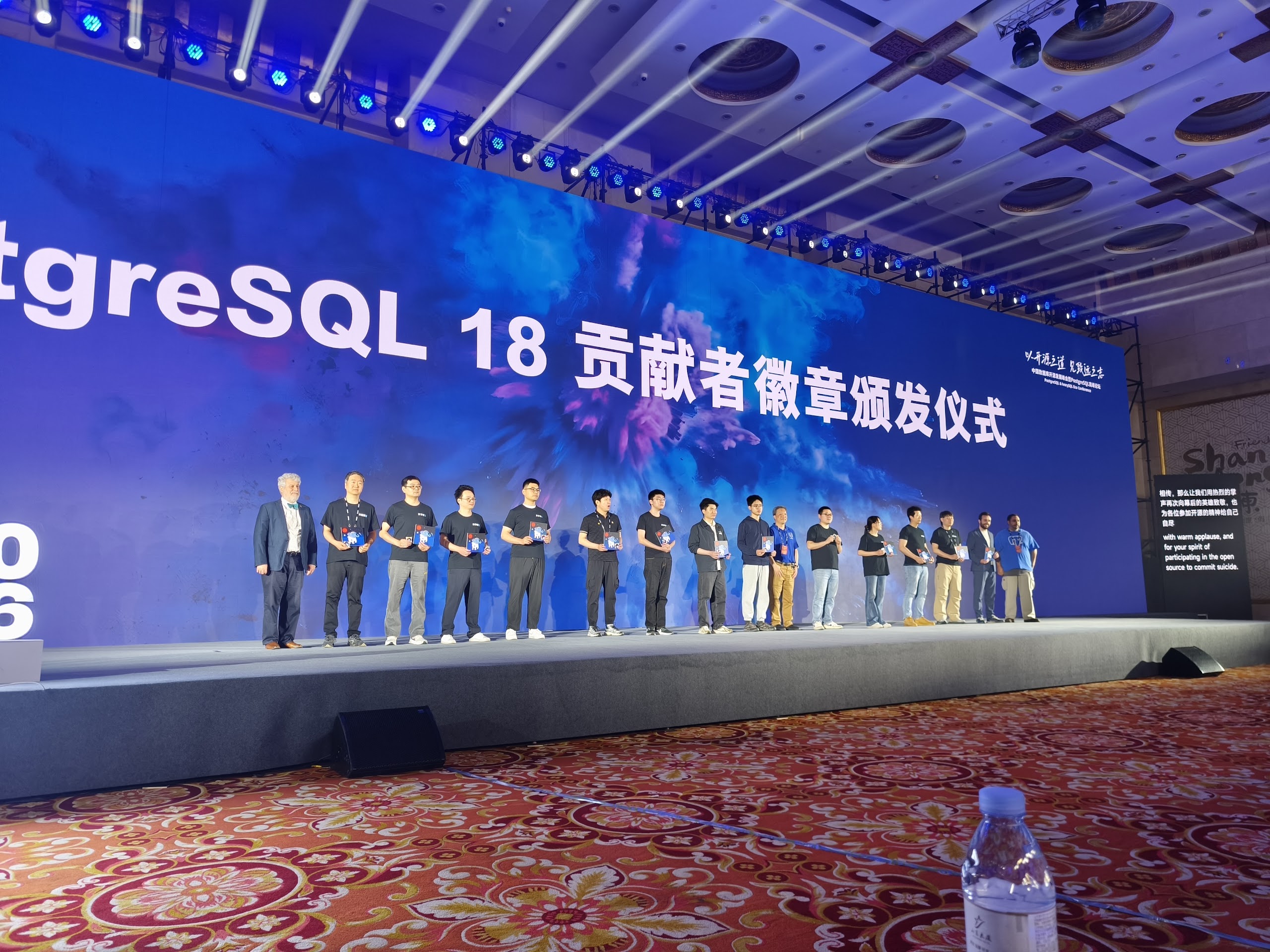
- Community Exhibitions & Awards — The morning concluded with Robert Treat and Mark Wong explaining how PostgreSQL conferences and community events are organized, together with ways to become involved in the PostgreSQL ecosystem. This was followed by a special Badge Award Ceremony recognizing contributors who worked on PostgreSQL 18.
Databases and AI
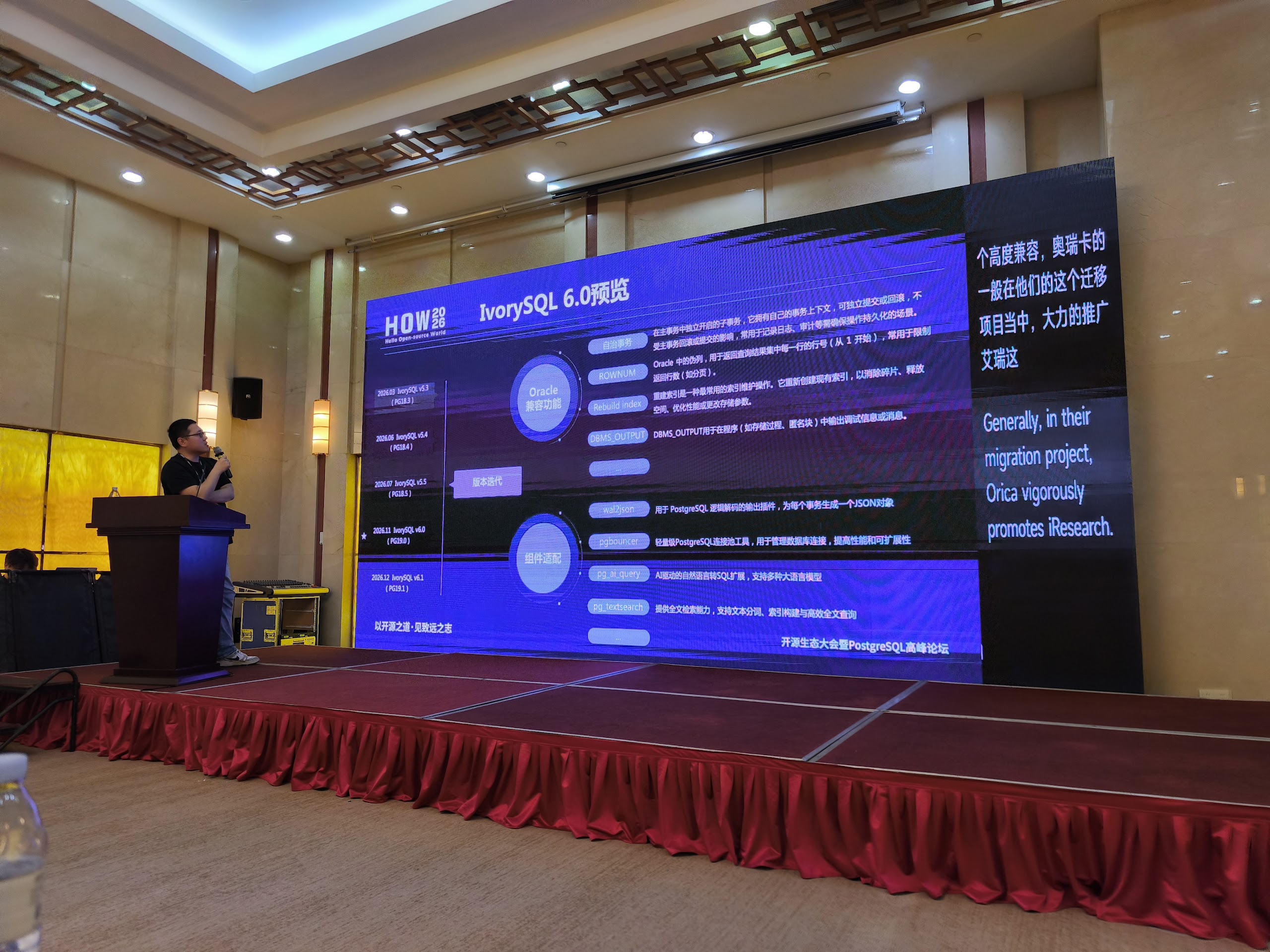
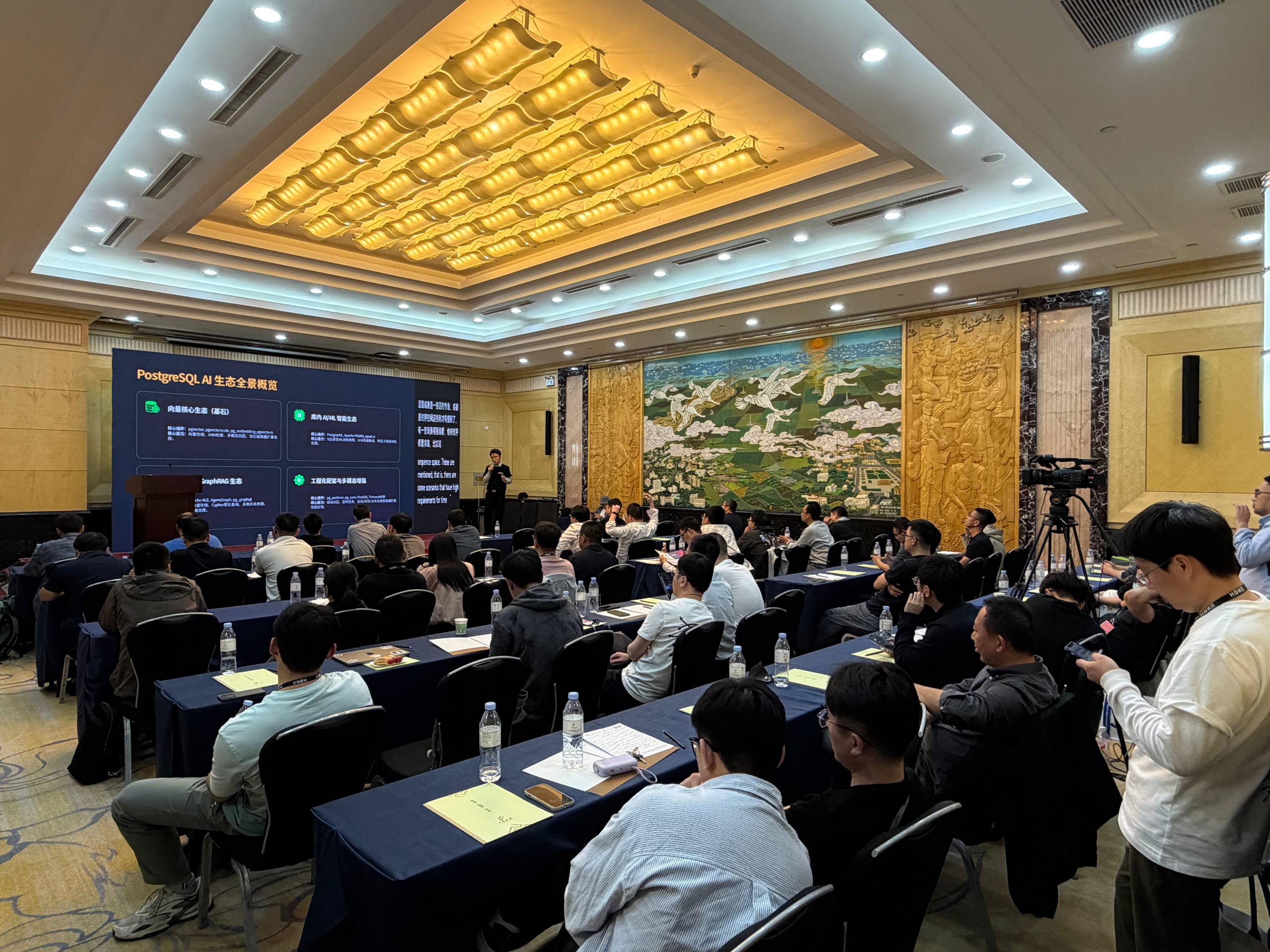
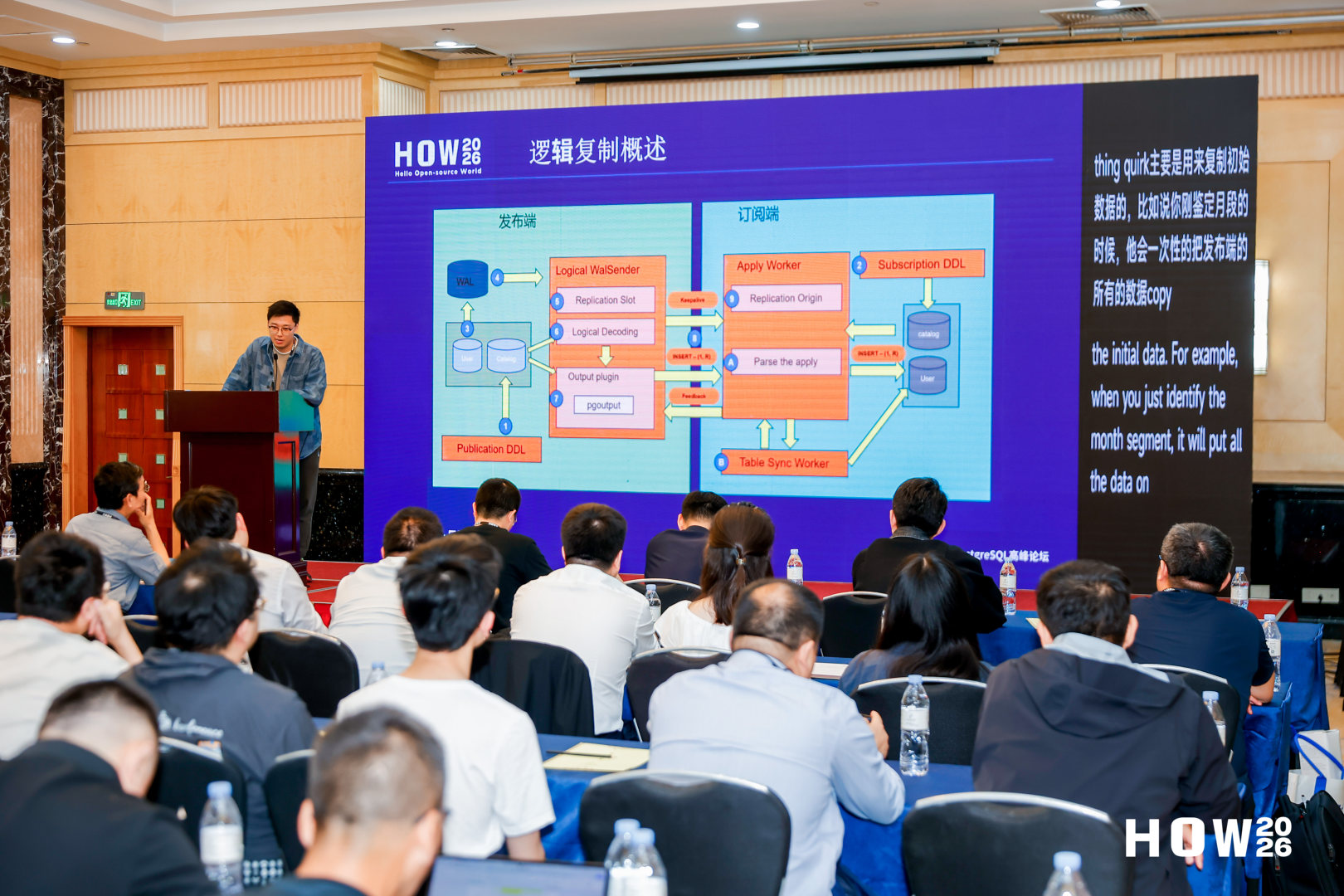
- AI Breakout Year: What Can IvorySQL Do? (Shawn Yan) — An overview of the practical applications and capabilities of IvorySQL for supporting AI-oriented workloads.
- Applications and Practices of PostgreSQL in AI (Dingding Wang) — This talk focused on leveraging PostgreSQL and its ecosystem to build efficient and cost-effective AI data pipelines and intelligent applications.
- AI Performance Analysis of the PostgreSQL Database (Shan Bai) and AI-Driven Query Optimization: Tree Transformer Breakthrough (Peng Cui) — These sessions were highly technical. Shan Bai demonstrated the use of AI techniques for general query optimization, while Peng Cui introduced QPR (Tree Transformer Representation) for multi-dimensional feature extraction and QPSLR (Ranking Learning) for ranking-based query optimization.
- AI-Native PG Diagnosis (Xiang Zheng) — A presentation focused on operational aspects of PostgreSQL, showcasing a transition from reactive diagnostics performed manually by administrators toward AI-native systems capable of proactively identifying problems.
- PostgreSQL in AI Applications: Reality Is More Complex Than Similarity Search (Florents Tselai) — A very practical talk highlighting that while pgvector and similarity search are valuable technologies, real-world AI applications require significantly broader and more sophisticated data modeling approaches.
Other Interesting Talks
- PostgreSQL Hacker: My Experience and Lessons (Chao Li) — A candid reflection on Chao Li’s first year as a PostgreSQL contributor. Rather than focusing primarily on tools, the talk explored early misunderstandings, technical and communication mistakes, and the strategies that helped overcome the perceived barriers to entry, offering valuable guidance for new contributors interested in joining the PostgreSQL community.
- Tracking Vacuum Resource Consumption: From Idea to Patch (Alena Rybakina) — An insightful presentation describing the architectural journey behind developing per-relation vacuum resource statistics in PostgreSQL. The talk demonstrated how strict internal constraints influenced key design decisions and provided valuable lessons about balancing observability with performance overhead in complex subsystems.
- Zabbix 7.0 PostgreSQL Monitoring Configuration (Yong Ren) — A highly practical session covering the latest features of Zabbix 7.0 and how to configure it effectively for PostgreSQL monitoring. The presentation covered essential metrics, anomaly alerting, monitoring of connection health, replication lag, hardware utilization, and strategies for maintaining high availability.
Conclusion
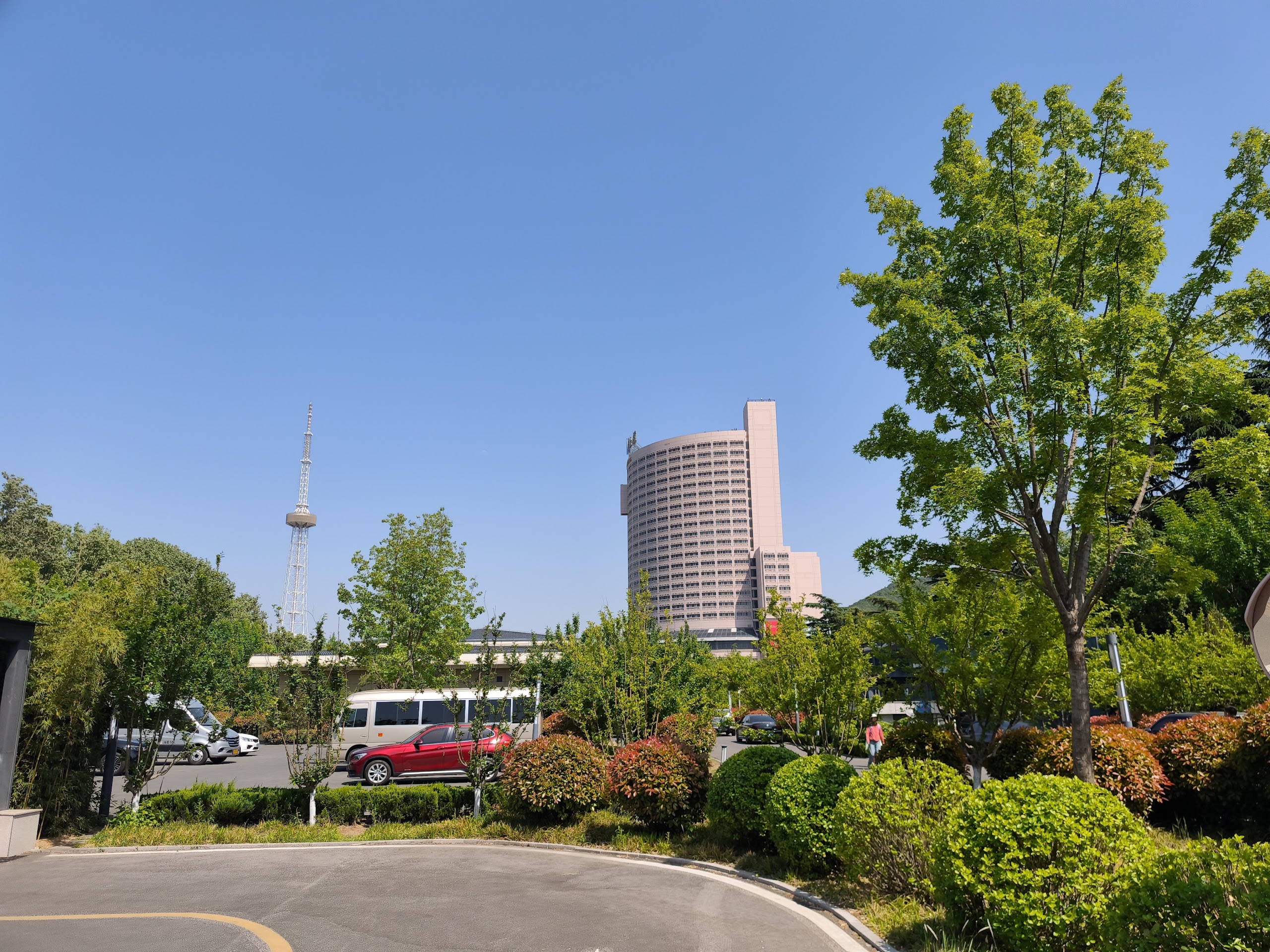
HOW2026 was an unforgettable experience. Jinan was a great host city, and the depth of knowledge shared by the PostgreSQL and IvorySQL communities was truly impressive. Many thanks to the organizers for the invitation and for the excellent organization of the conference.
Photos (c) HOW2026 organizers / Josef Machytka
| Categories: | Events PostgreSQL® |
|---|---|
| Tags: | planetpostgres planetpostgresql PostgreSQL® |